From approved formula to work order
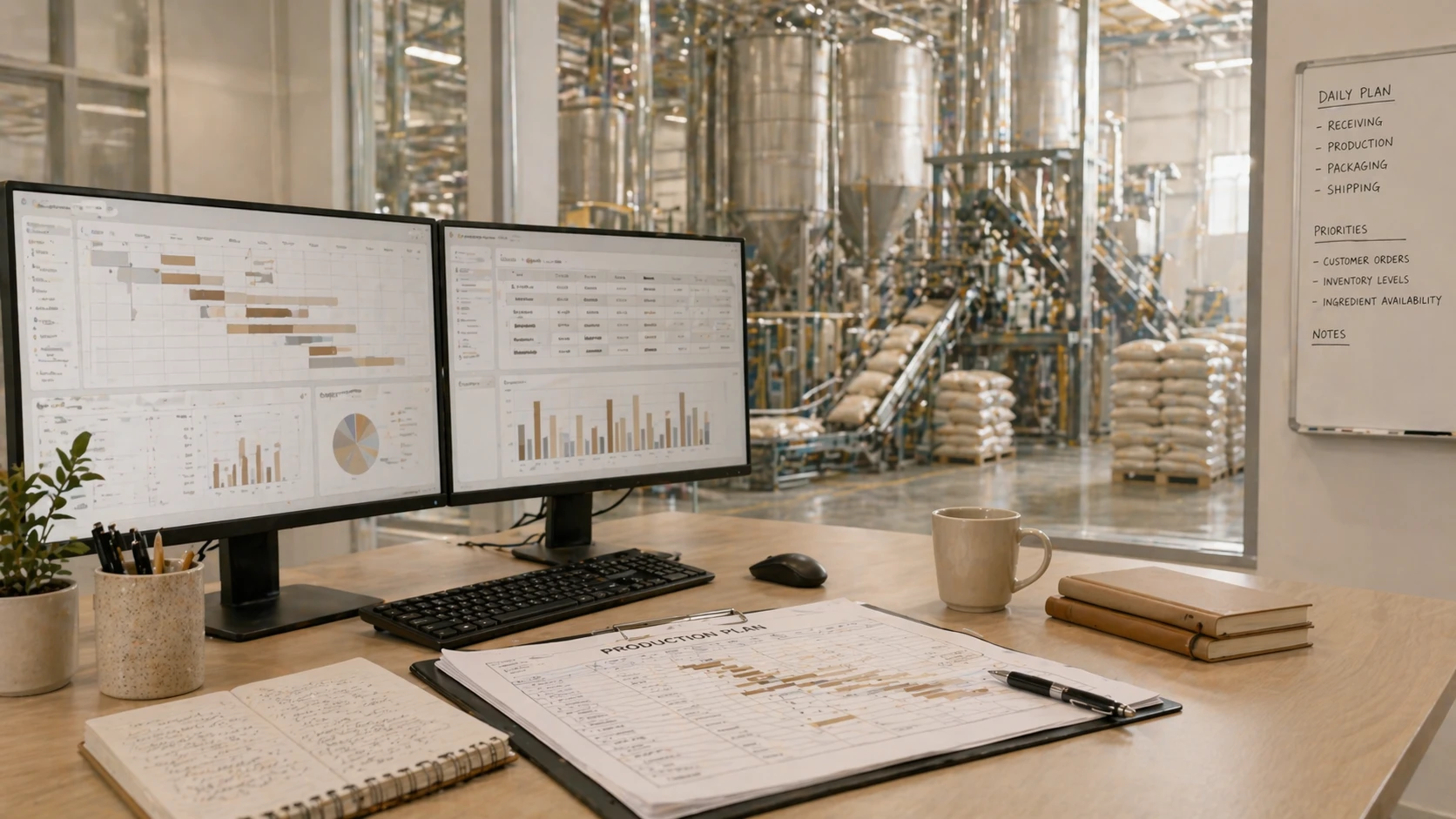
Formulation produces a recipe; production needs an instruction. The bridge between them is the work order: a decision to produce a quantity of a specific feed, on a line, on a date, from a specific formula version. In disconnected operations that bridge is a human retyping numbers, and every retype is a chance for the mill to produce something other than what the nutritionist approved.
An integrated flow removes the gap: production selects the feed, and the system pulls the current approved formula version automatically. Draft formulas are not eligible, which makes the approval workflow an operational gate rather than a formality.
Batch scaling and ingredient picking
A formula expressed in percentages must become kilograms for a four-tonne batch, adjusted for mixer capacity and rounded to what the dosing equipment can deliver. Scaling sounds trivial until premixes enter: an ingredient at half a percent of a small batch may fall below what the scale can weigh accurately, which is why micro-ingredients ride in premixes in the first place.
From the scaled batch comes the pick list: which lots, from which locations, in which order. Connected systems generate it from inventory automatically, applying lot selection rules such as first-expired-first-out. This is also where availability problems surface before they become stoppages, provided formulation already sees real stock levels.
Manufacturing instructions and execution
Beyond quantities, a batch carries process: mixing times, sequence rules such as liquids after dry blending, flushing requirements between medicated and non-medicated runs, and pelleting parameters. These instructions belong with the formula data, versioned with it, so a process change is documented exactly like a nutrient change.
During execution, operators confirm each addition, by scanning lots, weighing against tolerance, or both. Each confirmation becomes a record: this batch, this lot, this actual weight, this operator, this time. None of it requires heroics from the mill floor; it requires software that makes the right way the easy way.
Actual versus theoretical usage and yield
The quiet superpower of connected production is the comparison nobody can run on paper: what the formula said a batch should consume versus what it actually consumed. Persistent gaps point at dosing calibration, shrink, spillage, or substitutions that never reached the record. Yield closes the loop on the output side: tonnes of finished feed against tonnes of ingredients, batch by batch, line by line.
These numbers also feed back into formulation economics. If a formula consistently overconsumes a costly ingredient by two percent at the mixer, the formula's real cost is two percent higher than the solver believes, and the optimization is quietly wrong. Production data keeps the model honest, and planning ties it together across the schedule, as covered in production planning across formulas, batches, and deliveries.
Finished feed records and traceability
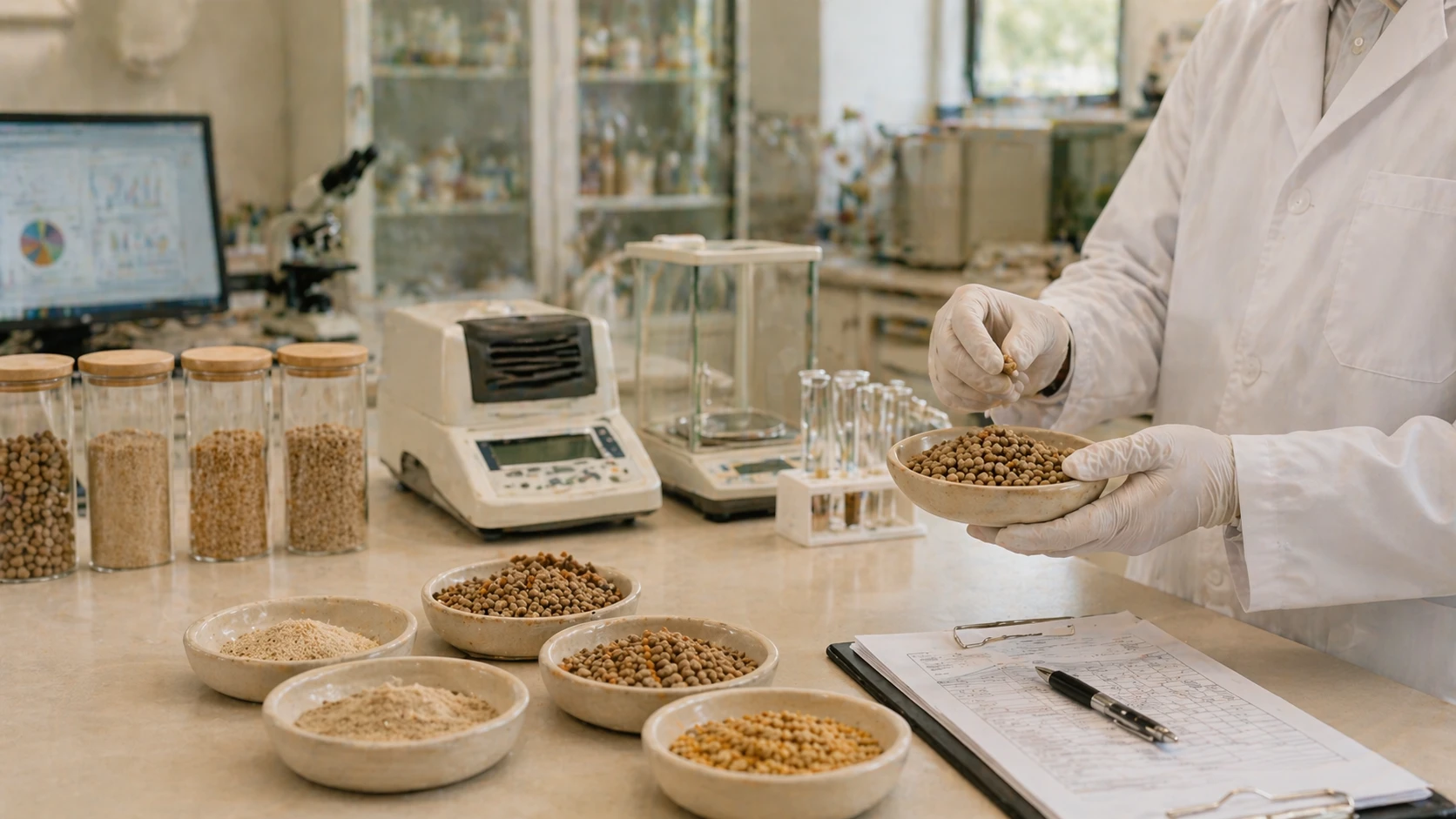
Every batch should leave behind a complete record: formula version, ingredient lots with actual quantities, process confirmations, operator identity, and quality results. Forward, this record answers which customers received feed containing a suspect ingredient lot; backward, it answers what exactly went into the feed a customer questions. Our article on batch evidence and quality control covers the quality half of that story.
When formulation and production share one system, this record assembles itself from the work already done. When they do not, it gets reconstructed after the fact, from paper, in the worst week to be doing reconstruction.
Why disconnected systems cost real money
Each gap between formulation and production has a price: re-entry labor, dosing drift, unrecorded substitutions, batches produced from superseded formula versions, and audits that take days instead of minutes. None of these appear as a line item, which is why they survive; together they routinely exceed the cost of the software that would remove them.
The case for an integrated platform is simply that the formula, the batch, and the record are one object viewed at three moments, and the system should treat them that way. That is the design principle behind Feedsoft's least cost feed formulation software and production modules.